What a restriction does
A restriction prevents refrigerant from moving freely through part of the circuit.
The evaporator may be starved while liquid refrigerant backs up before the restricted point.
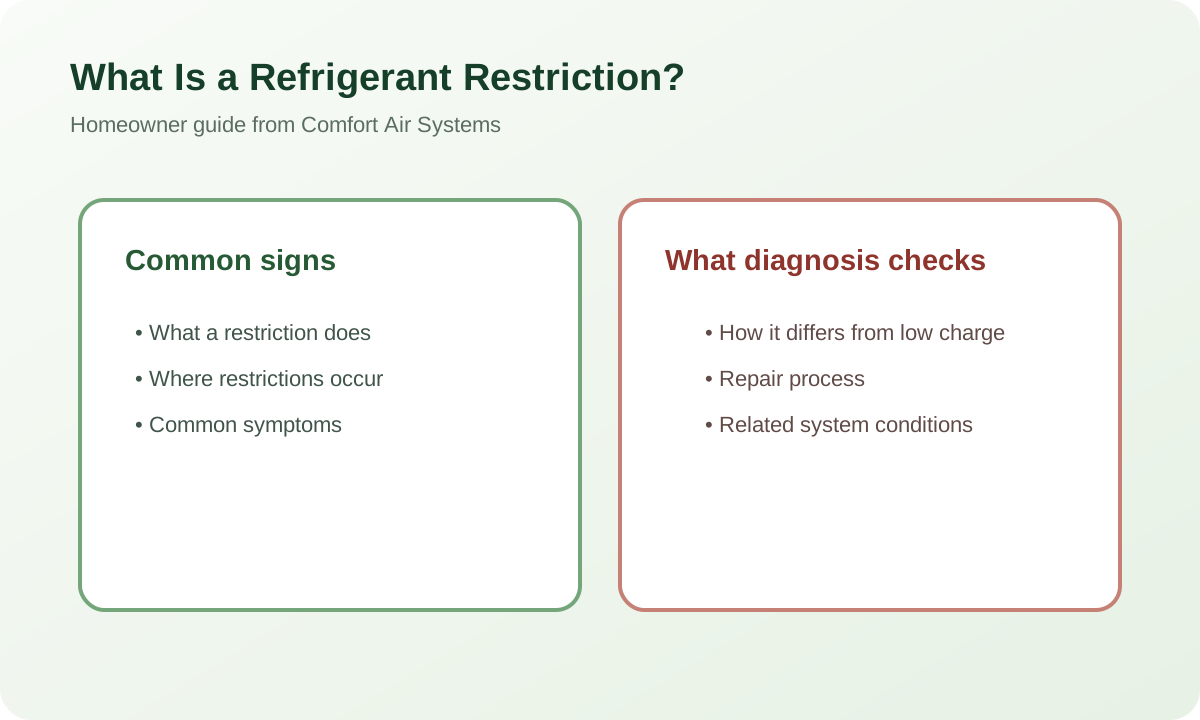
Where restrictions occur
Common locations include filter-driers, TXVs, pistons, distributors, capillary tubes, kinked lines, and contaminated components.
Moisture can freeze at a metering device and create an intermittent restriction.
Common symptoms
Possible signs include low suction pressure, high superheat, reduced capacity, frosting at a specific point, and a temperature drop across the restriction.
Subcooling may be high if liquid stacks in the condenser.
How it differs from low charge
Low charge and restrictions can both starve the evaporator.
Technicians compare subcooling, temperature patterns, leak evidence, pressure response, and component temperatures.
Repair process
The restricted component is replaced or the damaged line corrected. A filter-drier is installed as appropriate.
The system is pressure-tested, evacuated, and recharged accurately.
Frequently asked questions
Can moisture cause it?
Yes.
Can a kinked line cause it?
Yes.
Can adding refrigerant fix it?
No, and it may create overcharge.
Can it damage the compressor?
It can contribute to abnormal temperature and poor oil return.
Need a real diagnosis?
Get measurements, not guesses
Comfort Air Systems can test the actual equipment and explain the findings in plain language.