
What low refrigerant actually means
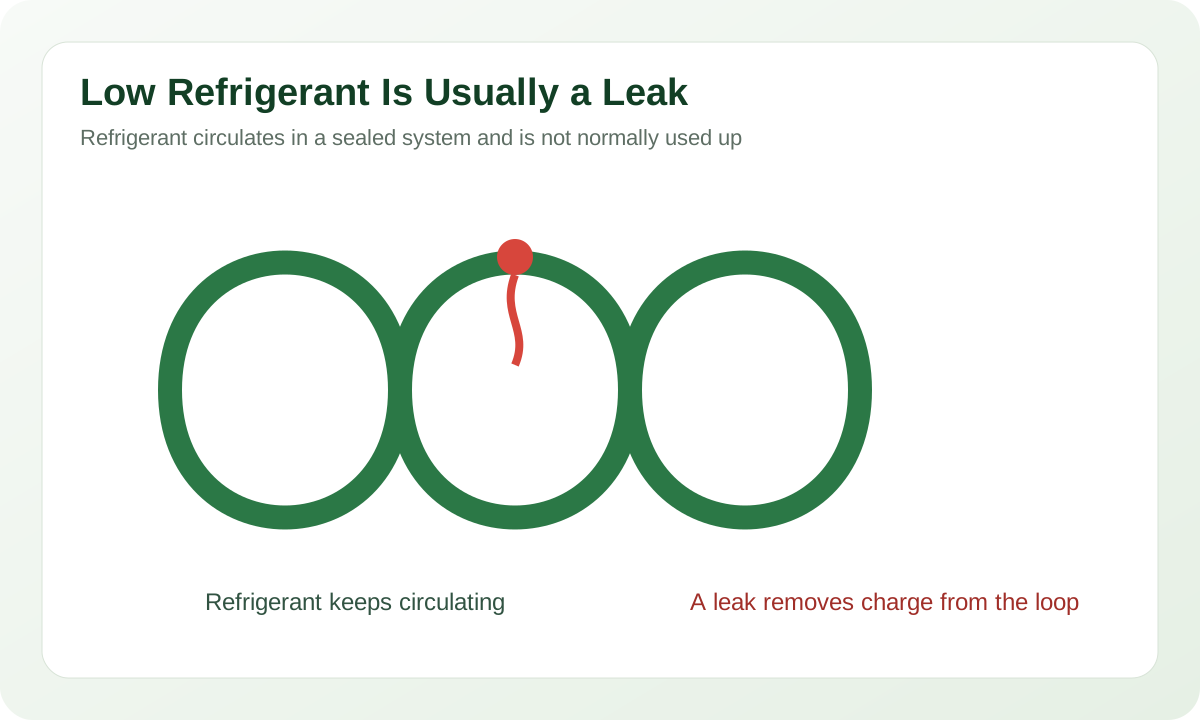
A sealed refrigeration circuit is designed to keep the same mass of refrigerant for years. Refrigerant changes between liquid and vapor, but it remains inside the tubing, coils, compressor, and controls.
If the charge becomes low, there is usually a leak, an installation or charging error, or previous service in which the full charge was not restored. Refrigerant does not become weak with age.
Common symptoms of low refrigerant
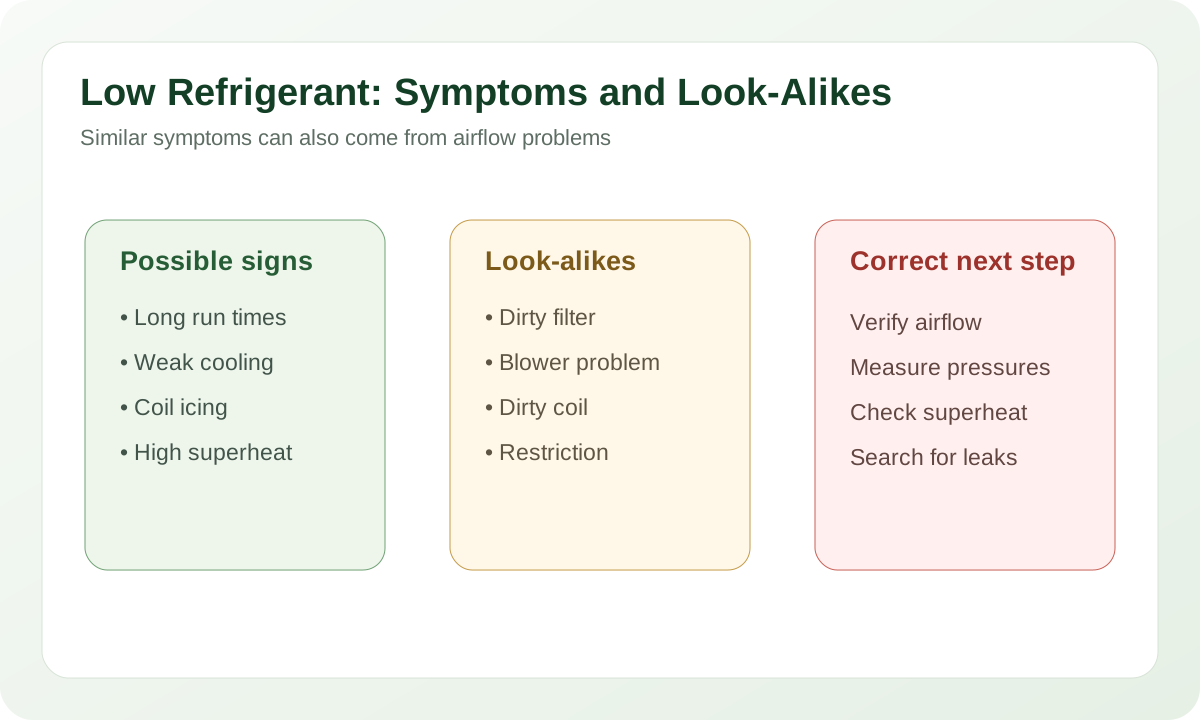
Possible signs include reduced heating or cooling capacity, long run times, poor dehumidification, a frozen evaporator coil, low suction pressure, high superheat, bubbles in a sight glass where applicable, and elevated energy use.
Some systems continue to provide partial comfort while the compressor runs hotter and longer. Others trip pressure controls or become unable to keep the indoor temperature near the setpoint.
Problems that can look like low refrigerant
A dirty filter, blocked evaporator coil, weak blower, restricted ductwork, failed indoor fan, dirty condenser, or incorrect fan speed can change pressures and temperatures in ways that resemble low charge.
A restricted filter-drier or TXV can starve the evaporator even when enough refrigerant exists elsewhere in the system. Charging based only on one pressure reading can make the problem worse.
How technicians diagnose low charge
Airflow should be verified first. The technician then considers indoor and outdoor temperatures, equipment design, refrigerant type, pressures, line temperatures, superheat, subcooling, and manufacturer charging procedures.
On many TXV systems, subcooling is a key charging measurement. On fixed-orifice systems, target superheat may be used. Neither method is reliable when airflow is incorrect or the system has not reached stable operation.
How refrigerant leaks are found
Leak-search methods include visual inspection for oil residue, electronic leak detectors, bubble solution, ultraviolet dye when appropriate, nitrogen pressure testing, isolation testing, and inspection of known problem areas such as service valves, Schrader cores, coils, joints, and vibration points.
Small leaks can be difficult to locate and may require time. The best method depends on the equipment, refrigerant, leak rate, access, and whether the system can be isolated.
Repair, evacuation, and recharge
When a repair is practical, the leaking component or joint is corrected, the system is pressure-tested as appropriate, evacuated to remove air and moisture, and charged according to manufacturer specifications.
Simply adding refrigerant may restore operation temporarily, but it does not stop an active leak. The customer should understand whether the visit is a temporary recharge, a leak search, or a complete leak repair.
Can you keep running a low system?
Continued operation can reduce capacity, freeze the evaporator, overheat the compressor, and interfere with oil return. If the system is icing, making abnormal noise, or unable to maintain temperature, it should be turned off and evaluated.
Frequently asked questions
Does refrigerant wear out?
No. It can become contaminated, but it is not normally consumed or depleted by ordinary operation.
Can refrigerant be low without a leak?
Yes, if the system was never charged correctly or was serviced improperly, but a leak is common.
Is adding refrigerant always illegal?
Rules depend on refrigerant type, system, leak rate, and jurisdiction. A licensed contractor should handle refrigerant according to applicable requirements.
Can low refrigerant damage the compressor?
Yes. Incorrect charge can contribute to high temperature, poor cooling, and lubrication problems.
Why not use stop-leak?
Sealants can create service and compatibility concerns. Their appropriateness depends on the system and manufacturer guidance.
Not sure what is actually wrong?
Get measurements, not guesses
The same symptom can come from several different failures. Comfort Air Systems can test the equipment and explain the findings in plain language.