
How an ECM motor works
An electronically commutated motor uses internal electronics to control speed and torque efficiently.
Some ECM designs increase speed as duct resistance rises in an attempt to maintain airflow.
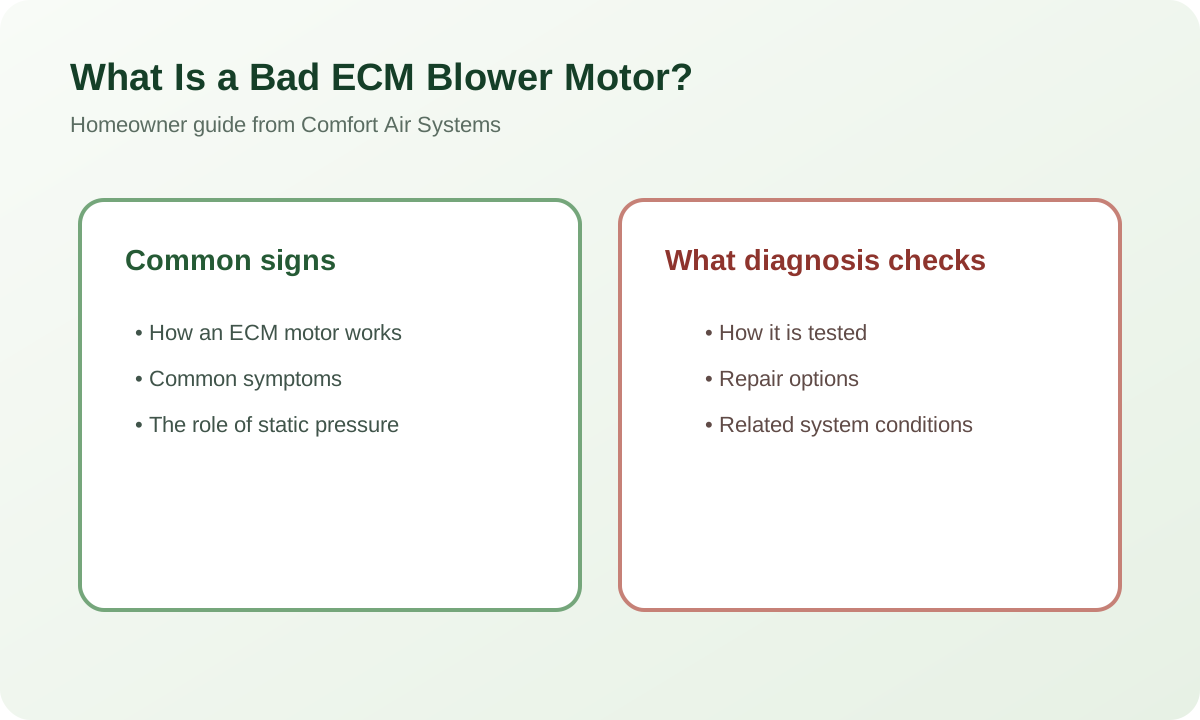
Common symptoms
The blower may not start, may surge, run at the wrong speed, operate intermittently, or produce unusual electronic noise.
Excessive airflow noise can also occur when the motor is fighting a restrictive duct system.
The role of static pressure
A restrictive filter, dirty coil, undersized return, or damaged duct can force the motor to work harder.
Replacing the motor without addressing the airflow problem can lead to repeat failure or poor comfort.
How it is tested
Technicians check supply voltage, low-voltage commands, communication signals, module condition, motor operation, and static pressure.
Manufacturer-specific test procedures may be required.
Repair options
Some designs allow module replacement; others require a complete matched motor and module.
Programming or configuration must match the furnace or air handler.
Frequently asked questions
Can the module fail separately?
Yes, depending on the motor design.
Can a dirty filter damage it?
Severe restriction can increase motor stress.
Can it be replaced with a standard motor?
Sometimes, but that may affect controls, airflow, and efficiency.
Why are ECM motors expensive?
They contain power electronics and require equipment-specific configuration.
Need a real diagnosis?
Get measurements, not guesses
Comfort Air Systems can test the actual equipment and explain the findings in plain language.