
What the TXV does
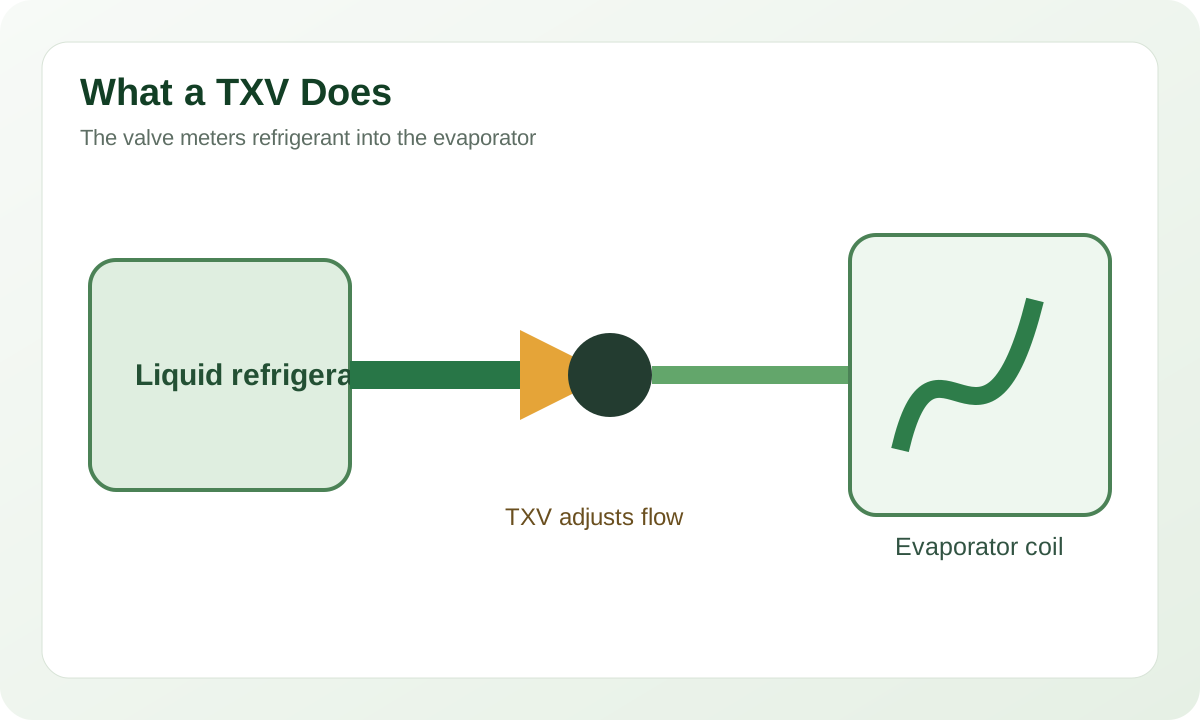
The valve meters high-pressure liquid refrigerant into the low-pressure evaporator. A sensing bulb monitors suction-line temperature, while evaporator pressure and an internal spring influence the valve position.
The goal is not simply to create a certain pressure. The valve attempts to maintain appropriate superheat so the evaporator is fed while liquid refrigerant is kept from reaching the compressor.
Symptoms of a restricted or underfeeding TXV
An underfeeding evaporator may show low suction pressure, high superheat, reduced capacity, a warm suction line, long run time, and frosting concentrated near the valve or distributor.
A restriction can be intermittent if moisture freezes at the valve or if contamination moves inside the system. The symptoms may change as the unit runs.
Symptoms of an overfeeding TXV
An overfeeding valve may produce low superheat and allow liquid refrigerant to leave the evaporator. That can create floodback, compressor noise, poor oil control, and mechanical damage.
Low airflow can create low superheat too, so airflow must be verified before the valve is blamed.
Problems that mimic a bad TXV
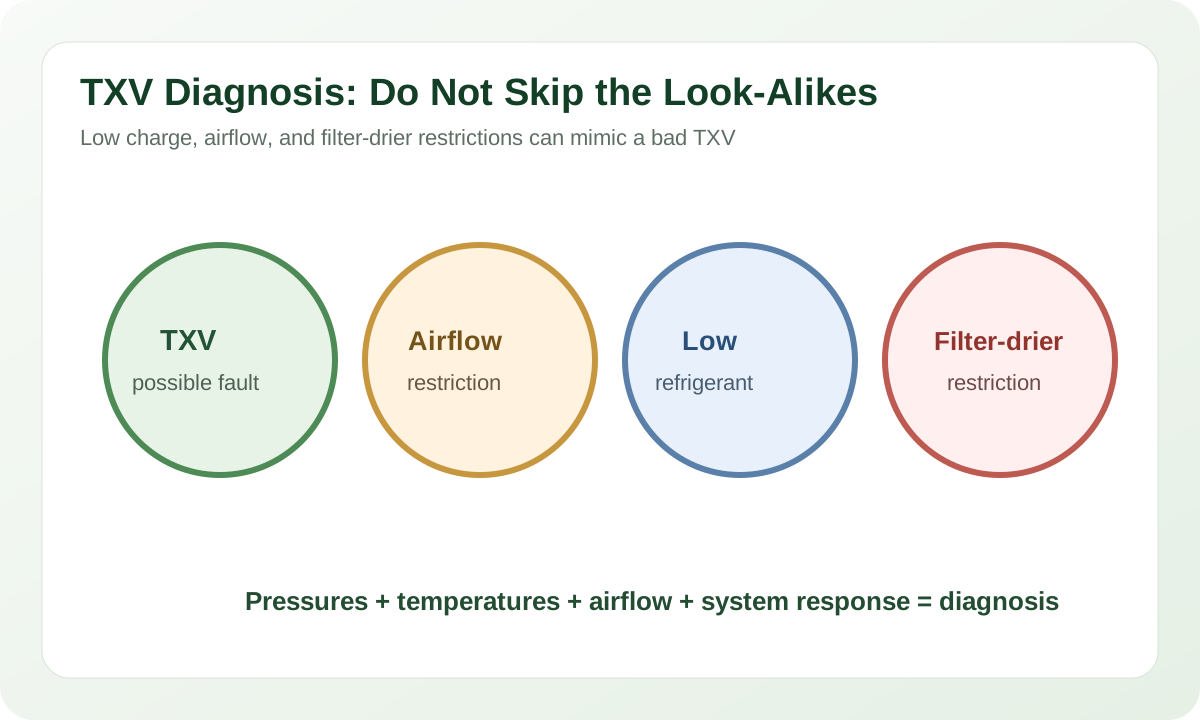
Low refrigerant can starve the evaporator. A restricted filter-drier, kinked line, blocked distributor, dirty filter, dirty evaporator, failed blower, loose sensing bulb, poor bulb placement, lost bulb charge, and incorrect system charge can all resemble TXV trouble.
How technicians diagnose a TXV problem
Diagnosis uses airflow, pressures, line temperatures, superheat, subcooling, temperature drop across possible restrictions, sensing-bulb attachment, equalizer condition, and the valve’s response to controlled temperature changes.
A technician may warm or cool the sensing bulb and observe whether refrigerant feeding responds. That test must be interpreted carefully and performed under stable conditions.
What TXV replacement involves
Replacement generally requires refrigerant recovery, opening the sealed circuit, removing or unbrazing the valve, installing the correct replacement, replacing the filter-drier, pressure testing, evacuation, and accurate recharge.
The sensing bulb must be located, attached, and insulated according to the equipment design. The external equalizer, distributor, and nearby tubing should be inspected for related issues.
What affects TXV repair cost
Cost depends on valve access, refrigerant type, equipment configuration, whether the coil must be removed, contamination, labor time, required refrigerant, and whether the part is under warranty.
A lower-cost diagnosis is not helpful if the wrong component is replaced. The value is in proving the restriction or control failure before opening the system.
Frequently asked questions
Can a TXV be cleaned?
External bulb and installation issues can sometimes be corrected, but an internally failed or restricted valve often requires replacement.
Can a bad TXV cause a frozen coil?
Yes, an underfeeding valve can reduce evaporator pressure, but low airflow and low refrigerant are also common causes.
Can a TXV fail intermittently?
Yes. Moisture, debris, bulb problems, and internal sticking can create changing symptoms.
Does every system have a TXV?
No. Some use fixed-orifice pistons, capillary tubes, electronic expansion valves, or other metering devices.
Should refrigerant be added before testing the TXV?
Not automatically. Charge and airflow should be evaluated using the correct procedure.
Not sure what is actually wrong?
Get measurements, not guesses
The same symptom can come from several different failures. Comfort Air Systems can test the equipment and explain the findings in plain language.