
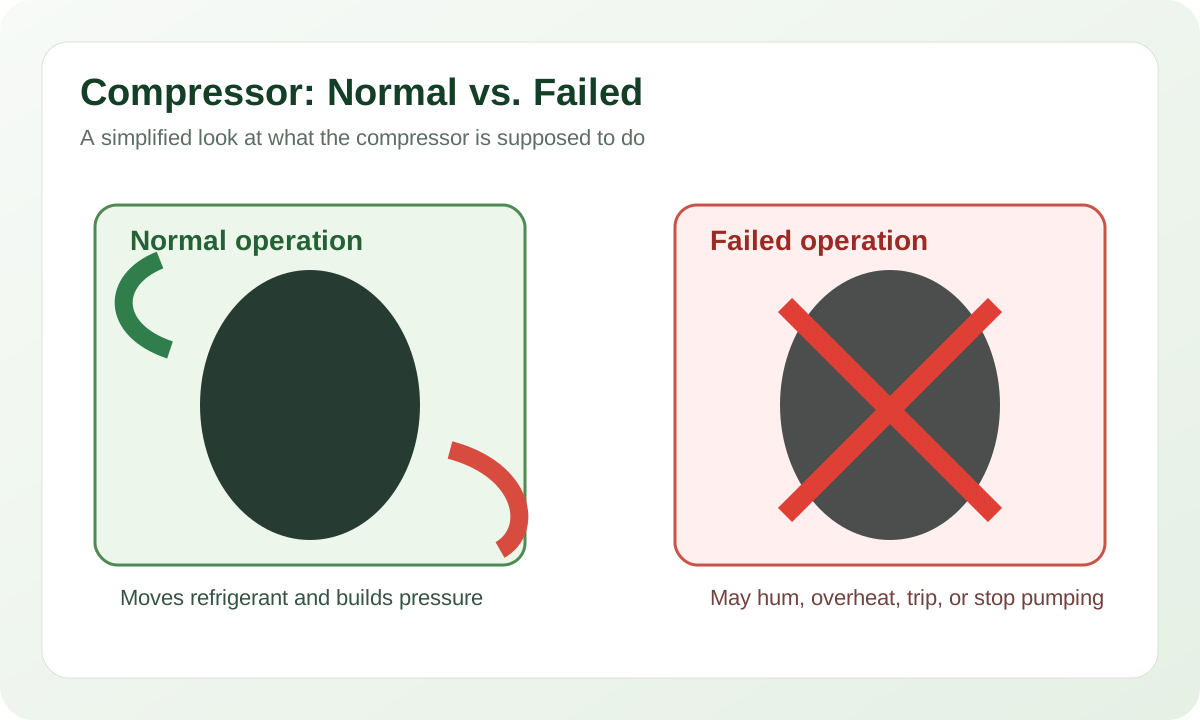
Common symptoms of a bad compressor
An outdoor unit that hums or clicks but does not start can point toward a compressor starting problem, but it can also be caused by a capacitor, contactor, low voltage, wiring issue, or control problem.
A breaker that trips immediately may indicate a shorted winding, a grounded compressor, damaged wiring, or another high-current fault. Repeatedly resetting the breaker is not a repair and can create additional risk.
A compressor can run and still fail to pump correctly. In that situation the outdoor unit may sound normal, yet the refrigerant pressures do not separate as expected and the home receives little heating or cooling.
Other warning signs include abnormal mechanical noise, very high current draw, overheating, frequent internal-overload shutdowns, and contamination or burned oil after an electrical failure.
What causes compressor failure
Compressors often fail after another condition has stressed them for a long time. Low refrigerant can reduce motor cooling and oil return. Severe overcharge or liquid refrigerant returning to the compressor can create mechanical stress. Dirty coils and airflow problems can drive operating temperatures and pressures outside the intended range.
Electrical problems matter too. Weak capacitors, burned contactors, loose connections, voltage imbalance, short cycling, and repeated hard starts can all shorten compressor life. Contamination from moisture, acid, or debris can damage insulation and internal surfaces.
Sometimes the compressor simply reaches the end of its service life. That is why diagnosis should address both the failed part and the condition that caused it; otherwise, a replacement compressor may be placed back into the same harmful environment.
How technicians test a compressor
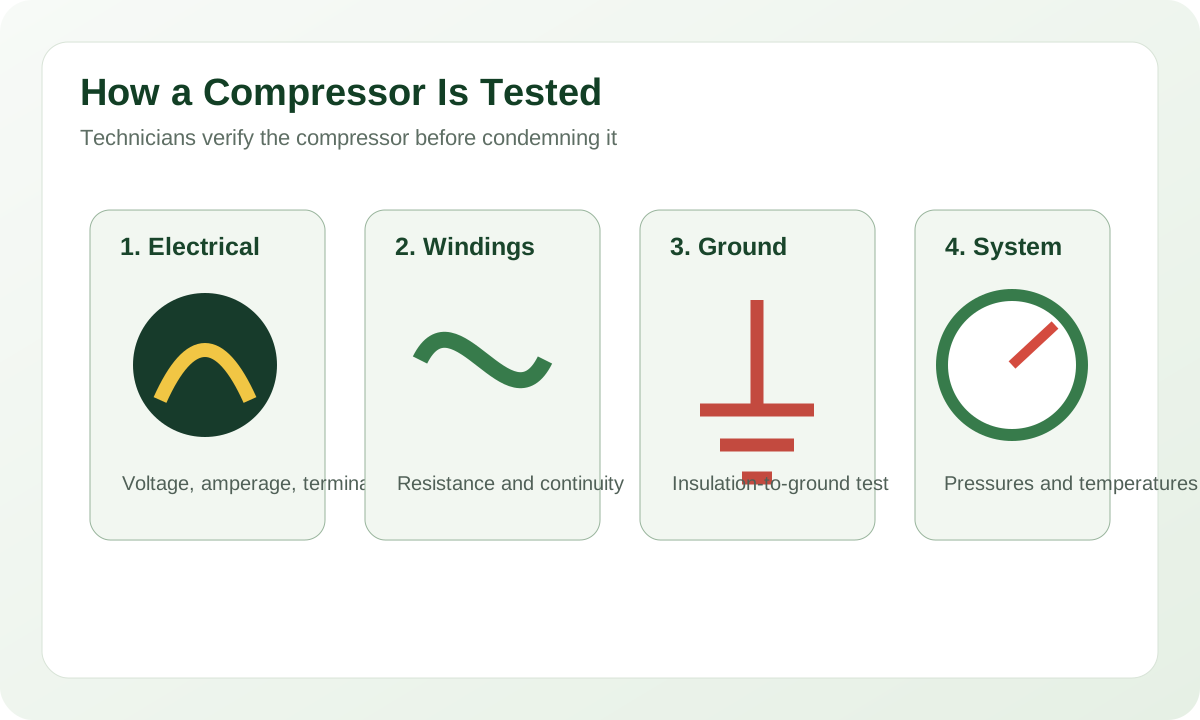
A responsible diagnosis begins by confirming the thermostat call, control voltage, line voltage, contactor operation, capacitor value, and wiring condition. Those external components can prevent a healthy compressor from starting.
With power safely isolated, winding resistance can be checked between the compressor terminals. The readings should make sense for the compressor design and should not show an open circuit. Each terminal is also checked to ground. A measurable path from a winding to the compressor shell can indicate failed internal insulation.
Current draw, starting behavior, temperature, operating pressures, superheat, subcooling, and the compressor’s ability to create a pressure difference are also evaluated. One measurement alone rarely tells the whole story.
Problems that can mimic a bad compressor
A failed run capacitor is one of the most common look-alikes. The compressor may hum, draw locked-rotor current, and shut off on protection even though the compressor itself is still capable of running.
A burned contactor, damaged wire, failed disconnect, low supply voltage, control-board problem, open pressure switch, or thermostat issue can also prevent operation. Refrigerant restrictions and incorrect charge can make a running compressor appear ineffective.
This is why 'the compressor is bad' should be supported by test results—not just by the fact that the system is not cooling.
Repair versus replacement
Internal compressor damage is generally not repaired in the field. The practical choices are usually compressor replacement or replacement of the outdoor unit or complete system.
Compressor replacement may make sense when the equipment is relatively new, the part is covered by a manufacturer warranty, the remaining system is in good condition, the refrigerant is current and supportable, and the cause of failure can be corrected.
System replacement deserves serious comparison when the equipment is older, has additional coil or electrical problems, uses an obsolete refrigerant, has a poor service history, or when the labor and related materials make compressor replacement a large percentage of the value of a new system.
What affects compressor replacement cost
Price depends on equipment size, refrigerant type, compressor design, accessibility, warranty status, contamination, required refrigerant recovery and recharge, filter-drier replacement, permits, and whether additional electrical or coil repairs are required.
A compressor that failed electrically may require an acid test, cleanup procedures, and additional components to protect the replacement. A written proposal should explain what is included rather than presenting the compressor as a single isolated part.
How to reduce compressor risk
Maintain clean filters and coils, correct airflow, stable electrical connections, and proper refrigerant charge. Address short cycling, icing, unusual noise, or repeated breaker trips promptly.
Seasonal maintenance cannot prevent every failure, but it can reveal weak capacitors, dirty coils, abnormal current, airflow restrictions, and developing refrigerant issues before they become more expensive.
Frequently asked questions
Can a bad capacitor make a good compressor look bad?
Yes. A weak or failed capacitor can prevent a healthy compressor from starting. The capacitor should be tested before the compressor is condemned.
Can I keep resetting the breaker?
No. Repeated trips indicate a fault or overload that needs diagnosis.
Can a compressor fail without making noise?
Yes. It may have an open winding, fail to pump, or shut off internally without dramatic noise.
How long should a compressor last?
There is no guaranteed lifespan. Installation quality, maintenance, operating conditions, electrical quality, and system design all matter.
Does a manufacturer warranty cover labor?
Often the part warranty and labor coverage are separate. The exact answer depends on the equipment registration and warranty terms.
Not sure what is actually wrong?
Get measurements, not guesses
The same symptom can come from several different failures. Comfort Air Systems can test the equipment and explain the findings in plain language.