What the blower motor does
The blower supplies the airflow required for heating, cooling, filtration, and dehumidification.
Different systems use permanent-split-capacitor motors, ECM motors, or variable-speed designs.
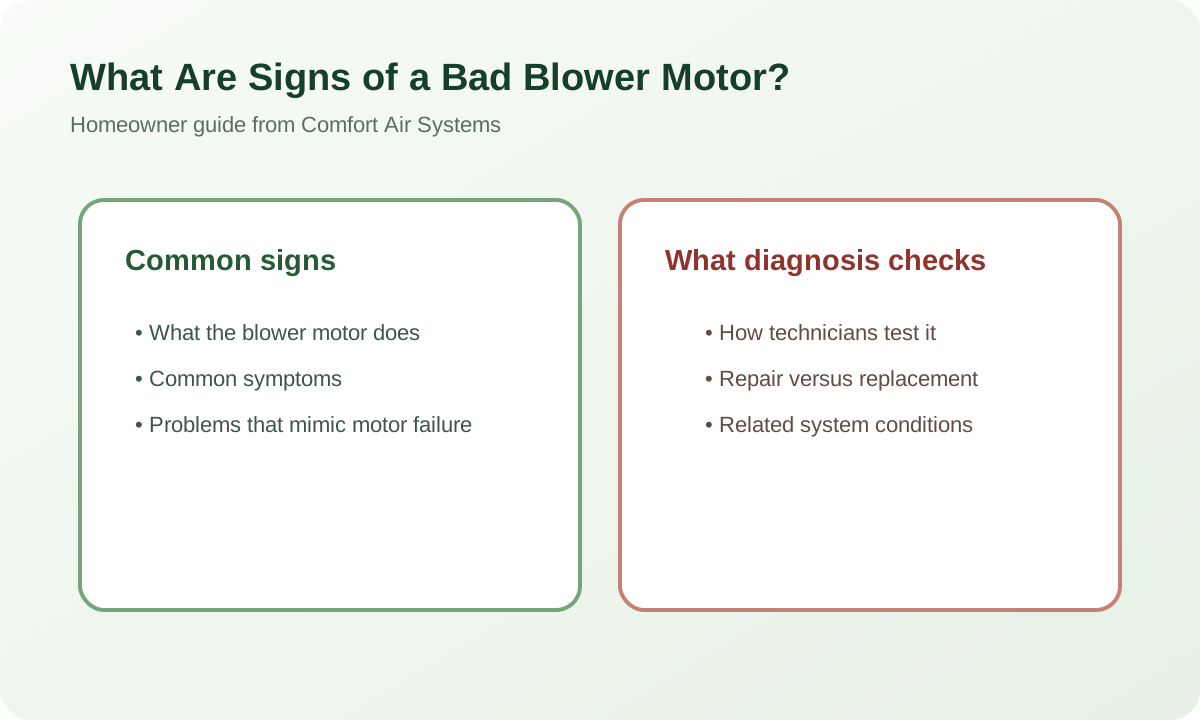
Common symptoms
The blower may not start, may run slowly, stop after heating up, surge, make bearing noise, or operate only at certain speeds.
Weak airflow can cause a furnace to overheat or an evaporator coil to freeze.
Problems that mimic motor failure
A failed capacitor, control board, relay, door switch, wiring problem, dirty wheel, or high static pressure can create similar symptoms.
The motor should be tested as part of the whole air-moving system.
How technicians test it
Testing may include voltage, control signals, winding resistance, capacitor value, motor current, temperature, wheel condition, and static pressure.
ECM motors may require communication or module testing in addition to standard electrical checks.
Repair versus replacement
Some problems involve only a capacitor or control module. Others require a complete motor replacement.
The replacement must be configured for correct airflow and rotation.
Frequently asked questions
Can a blower motor fail intermittently?
Yes. Heat-related winding or electronic failures may appear after running.
Can it freeze the AC coil?
Yes. Low airflow is a common cause of coil icing.
Does noise always mean replacement?
No. Debris, a loose wheel, or duct vibration may be the cause.
Can high static pressure shorten motor life?
Yes. It can increase workload and operating temperature.
Need a real diagnosis?
Get measurements, not guesses
Comfort Air Systems can test the actual equipment and explain the findings in plain language.